Middle School Reduced Bathroom Vaping with HALO Smart Sensors
Creating a safe and healthy learning environment has become one of the most pressing priorities for K–12 schools across the country. From academic performance to student wellness, school administrators, board of education members, and PTA leaders are increasingly focused on addressing the growing issue of youth vaping on campus.
For one middle school, the challenge had become impossible to ignore. Students were vaping nicotine and THC products in restrooms at alarming rates, creating health concerns, disciplinary issues, and anxiety among parents and faculty. Traditional supervision methods were not effective, especially in student bathrooms where privacy must be respected.
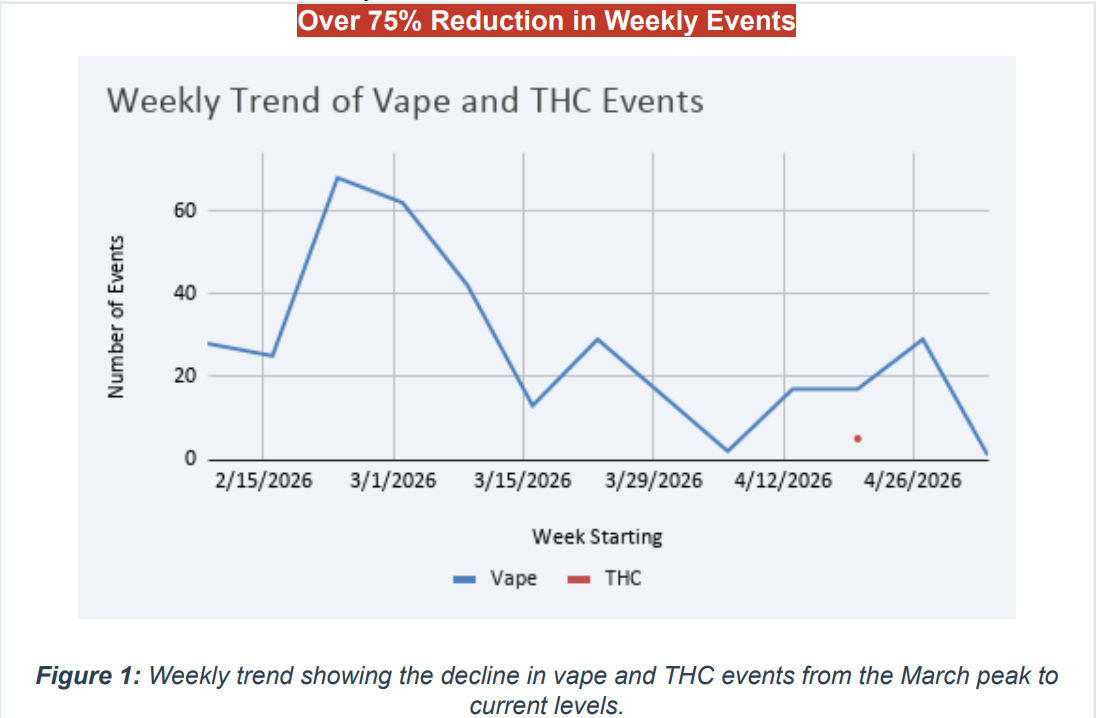
Earlier this year, the school took action implement a proactive vape detection solution using HALO Smart Sensors. The results have been significant: within four months, the school reduced vape and THC-related incidents by 75%.
Addressing the Rise of Vaping in School Bathrooms
Like many schools nationwide, administrators began hearing about an increase in student vaping activity from multiple sources, especially in bathrooms during class periods. Staff reports, student complaints, even concerned parents, and disciplinary incidents pointed to a growing problem involving both nicotine and THC vape products.
The challenge was multifaceted:
- Bathrooms are among the most difficult spaces to monitor while preserving student privacy.
- Vape devices are increasingly small, discreet, and difficult to detect.
- THC cartridges and flavored nicotine products often produce limited visible vapor.
- Students were congregating in restrooms during passing periods and during class time.
School leadership recognized that the issue was not simply disciplinary — it was fundamentally tied to student health, campus safety, and long-term wellness outcomes.
After evaluating multiple technologies, the school selected HALO Smart Sensors because they are specifically designed for privacy-sensitive environments such as school bathrooms, locker rooms, health offices, and counseling spaces. They appreciated that HALO sensors do not record anything, neither video or audio. Instead, they detect environmental indicators associated with vaping, THC smoke, abnormal air quality conditions, and other safety concerns.
Implementing Vape Detection Technology in School Bathrooms
Working closely with the district leadership, they started with a proof of concept to verify that the sensor could identify the right activity and notify personnel at a single campus. After that a pilot program was implemented designed to target the concerns tailored to each campus environment. The school eventually installed HALO Smart Sensors in student bathrooms across the campus to provide real-time vape detection alerts and environmental monitoring.
Key features included:
- Real-time vape detection alerts to appropriate personnel
- THC and smoke detection
- Air quality monitoring
- Privacy-compliant bathroom monitoring
- Cloud-based notifications for staff
- Historical analytics and reporting
Rather than focusing solely on punishment, the school adopted a harm reduction and early intervention strategy. Staff used sensor alerts to identify concerning patterns, intervene earlier, and connect students with counseling or educational resources before behaviors escalated.
Measurable Results: A 75% Reduction in Vape Events
The data generated by the HALO Smart Sensors provided school administrators with clear visibility into campus trends and demonstrated the effectiveness of the initiative.
During February and March, the school experienced some of its highest levels of vaping activity, with nearly 68 vape-related events recorded in a single week during early March.
However, consistent monitoring combined with proactive intervention quickly began changing student behavior.
Over the following four months, weekly incidents steadily declined to fewer than 10–15 events per week — representing approximately a 75% reduction in vaping and THC incidents on campus.
The impact extended far beyond the numbers.
School administrators reported:
- Cleaner and healthier restroom environments
- Reduced student congregation in bathrooms
- Faster staff response times
- Increased parent confidence
- Improved student accountability
- Greater awareness around the health risks of vaping
For many students, simply knowing that vape detection technology was present acted as a deterrent.
Why Early Intervention Matters in Middle School
Middle school represents a critical stage of adolescent brain development, making early intervention especially important when addressing nicotine and THC exposure.
According to research from the National Institutes of Health, adolescent brains are particularly sensitive to nicotine’s rewarding effects. Early exposure can alter the brain’s reward pathways and increase vulnerability to future addiction.
Additional research from MD Anderson Cancer Center highlights that nicotine use among adolescents can negatively affect attention, learning, impulse control, and mood regulation — all functions essential for academic and social development.
School leadership emphasized that the initiative was never about surveillance or punishment. Instead, the goal was to protect students and create healthier campus environments where children can focus on learning and development.
Many parents and educators are unaware that vape aerosols may contain volatile organic compounds (VOCs), petrochemical byproducts, and harmful particulates in addition to nicotine or THC. Some devices use plastic housings and heating elements that can degrade under high temperatures, releasing additional contaminants into the air.
HALO Smart Sensors help schools identify these environmental hazards before they become normalized behaviors within student culture.
*Learn more about all the ways you can create a safer, smarter facility watch the video!
A Consultative Approach to School Safety
What made this deployment successful was not just the technology itself, but the strategic partnership behind it.
For 20+ years ADVANTIDGE has worked with schools, districts, and educational organizations, helping leadership teams implement integrated safety and security solutions that align with operational goals and community expectations. Since 2001, we have supported dozens of schools across Los Angeles as well as hundreds of campuses throughout California.
By taking a consultative approach, ADVANTIDGE helps schools evaluate their specific challenges before recommending solutions, ensuring that administrators, faculty, parents, and students all benefit from a safer educational environment.
Building a Healthier Future for Students
This middle school’s success demonstrates that schools can meaningfully reduce vaping incidents when they combine modern vape detection technology with thoughtful intervention strategies and community support.
For administrators and PTA leaders evaluating vape detection systems for schools, the results offer a compelling example of how proactive monitoring can improve campus safety while supporting student wellness.
Cleaner air, safer bathrooms, earlier intervention, and healthier students are outcomes every school community can support.
As vaping continues to impact schools nationwide, educational leaders are increasingly recognizing that protecting student health requires both compassion and action. HALO Smart Sensors, combined with ADVANTIDGE 20+ years of experience, we are helping schools take that next step forward.