Background
A major construction company overseeing a long-term development project in Southern California faced a growing challenge. With hundreds of contractors entering and exiting the site each day through a limited number of controlled gates, their internal teams struggled to keep track of who was onsite, when, and for how long. Security guards were tasked with manually verifying IDs, and management lacked a reliable ID card tracking system to validate hours worked for payroll reconciliation or ensure only properly credentialed workers were on-site.
Challenges
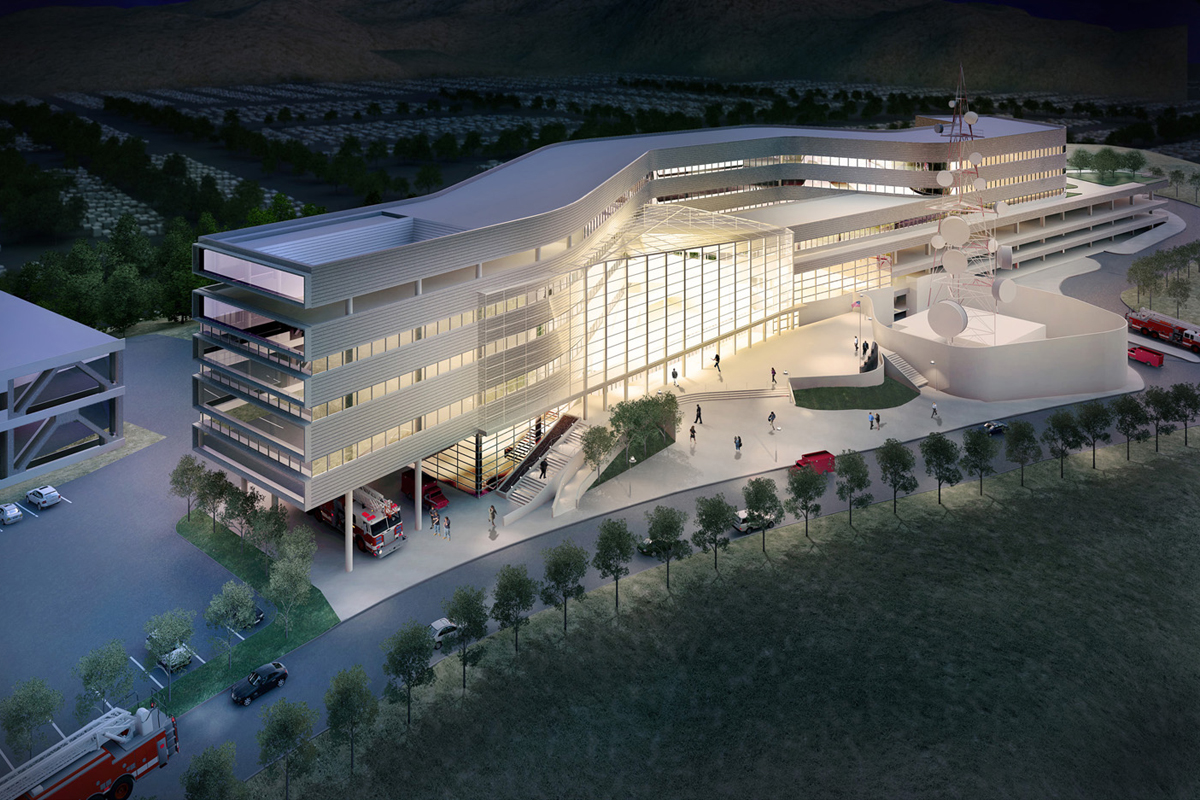
The jobsite is a first-of-its-kind zero carbon emissions facility spanning 174 acres, dedicating 63 acres to on-site renewable energy. The completed facility is set to establish new industry standards for emissions reduction by incorporating a state-of-the-art carbon capture system, secondary high-efficiency filtration, and NOx emissions mitigation.
After initially purchasing ID printing hardware and software, the company attempted to configure a homegrown solution in-house. Despite their technical abilities and years of experience in the construction industry, the system was unreliable and time-consuming for anything beyond basic use. It quickly became clear they were wasting valuable time and it was costing them money. Management realized their in-house approach was inefficient and they tasked their security team with finding a trusted partner with deep expertise in ID card tracking and security integration.
The Consultative Approach by ADVANTIDGE
ADVANTIDGE was initially brought in to assess the situation and confirm if any of their existing components could used. Unlike vendors who push one-size-fits-all systems, we took a consultative approach from day one. By asking smart questions, we began by listening closely to the security team, operations managers, and IT staff to gain a comprehensive understanding of:
-
Who needed to be tracked (contractors, vendors, staff)
-
What data was important (photo ID, orientation date, trade type, company, hours worked)
-
Where the tracking needed to take place (entry/exit gates, internal checkpoints)
-
How the client preferred to scan, store, and report data
After this initial discovery process, ADVANTIDGE performed a technical assessment of the customer’s existing infrastructure plus some recommendations for a turnkey ID card tracking solution:
- Windows 11 laptop at the security station
-
iPhones and iPad tablets used by security guards at the gates
-
USB Wireless Barcode reader connected to the laptop
-
FARGO DTC ID card printer to issue durable PVC badges
-
Cards printed with photo, name, company, barcode, and tracked database fields such as trade specialization and orientation date
- ID Software that runs on an Access MDB or Excel spreadsheet which allows for a live connection to the cloud server
We immediately instilled confidence that they didn’t need to scrap their current equipment. Instead, we would help them get more value from what they had by implementing Epic ID Card Tracking, a cloud-based tracking platform we’ve recommended for years due to its flexibility, security, and ease of use.
ID Card Tracking Solution Deployment
Database Import & System Configuration
We began by importing the company’s personnel data into Epic Track. This included not just names and photos, but essential tracking fields such as:
-
Trade expertise
-
Orientation date
-
Representing company
-
Barcode ID (to link badges with cloud records)
The ID card tracking system was configured to enable check-in and check-out scanning, which would log real-time attendance and total hours worked.
Field Hardware Testing
ADVANTIDGE tested the Epic Track app on multiple devices, including iPhones, Android smartphones, tablets, and their existing Windows laptop with a standard USB wireless barcode reader.
The app, downloadable from the Apple App Store and Google Play, eliminated the need for expensive proprietary hardware. The client’s team appreciated this flexibility and low total cost of ownership.
Live Implementation
Within 24 hours, the ID card tracking system was live. The security team was began scanning IDs using mobile devices, with scans instantly syncing to the cloud-based Epic Track Server. The entire process was frictionless, and management appreciated the faster, more professional check-in process.
Training and Onboarding
We delivered hands-on training to the head of security to ensure they could operate the ID card tracking system confidently and update records when needed. Once the initial setup was validated, we conducted team training for gate staff, focusing on:
-
Scanning workflows at check-in/check-out
-
How to handle expired or missing credentials
-
Real-time data visibility for active workers onsite
Reporting and Optimization
By the end of the first week, ADVANTIDGE helped the security team generate custom ID card tracking reports that:
-
Listed all workers onsite at any given time
-
Calculated total hours worked per individual and per company
-
Supported payroll reconciliation and compliance reporting
These reports gave management the data they needed, delivered in a format that was easy to digest and actionable.
Results & Future Plans
-
Rapid deployment: From consultation to live scanning in under 72 hours
-
Zero waste: Fully leveraged existing ID printers, badges, and hardware
-
Increased accountability: No more guesswork about who was onsite or when
-
Operational efficiency: Accurate attendance data without extra administrative burden
-
Scalable model: The ID card tracking system is being expanded to future job sites
The client is now confident in their ability to manage jobsite security and attendance with a modern, mobile-first ID card tracking solution. They’ve established a repeatable framework to roll out across new construction projects, allowing them to track contractors, employees, and vendors with minimal overhead.
Why ADVANTIDGE
With over 20 years of experience, ADVANTIDGE supports construction firms, schools, hospitals, nonprofits, government entities, and manufacturers with identification, access control, and visitor management solutions. Our consultative approach ensures we don’t just sell products—we solve problems.
Whether it’s a complex enterprise security need or a jobsite with hundreds of contractors, ADVANTIDGE brings together the right technology, industry knowledge, and attention to detail to deliver successful outcomes.
Finding a better way isn’t just part of our process—it’s who we are.